FAQ
AI virtually screens over 10 billion compounds, pinpointing the most promising candidates before any lab work begins. This dramatically reduces the time and resources required for early-stage discovery.
Over 70% cost reduction in hit discovery — powered by LM-VS™
10B
Compound Library
50
AI Learning Cycles
$20K
Per Target Protein
200
Top Candidates
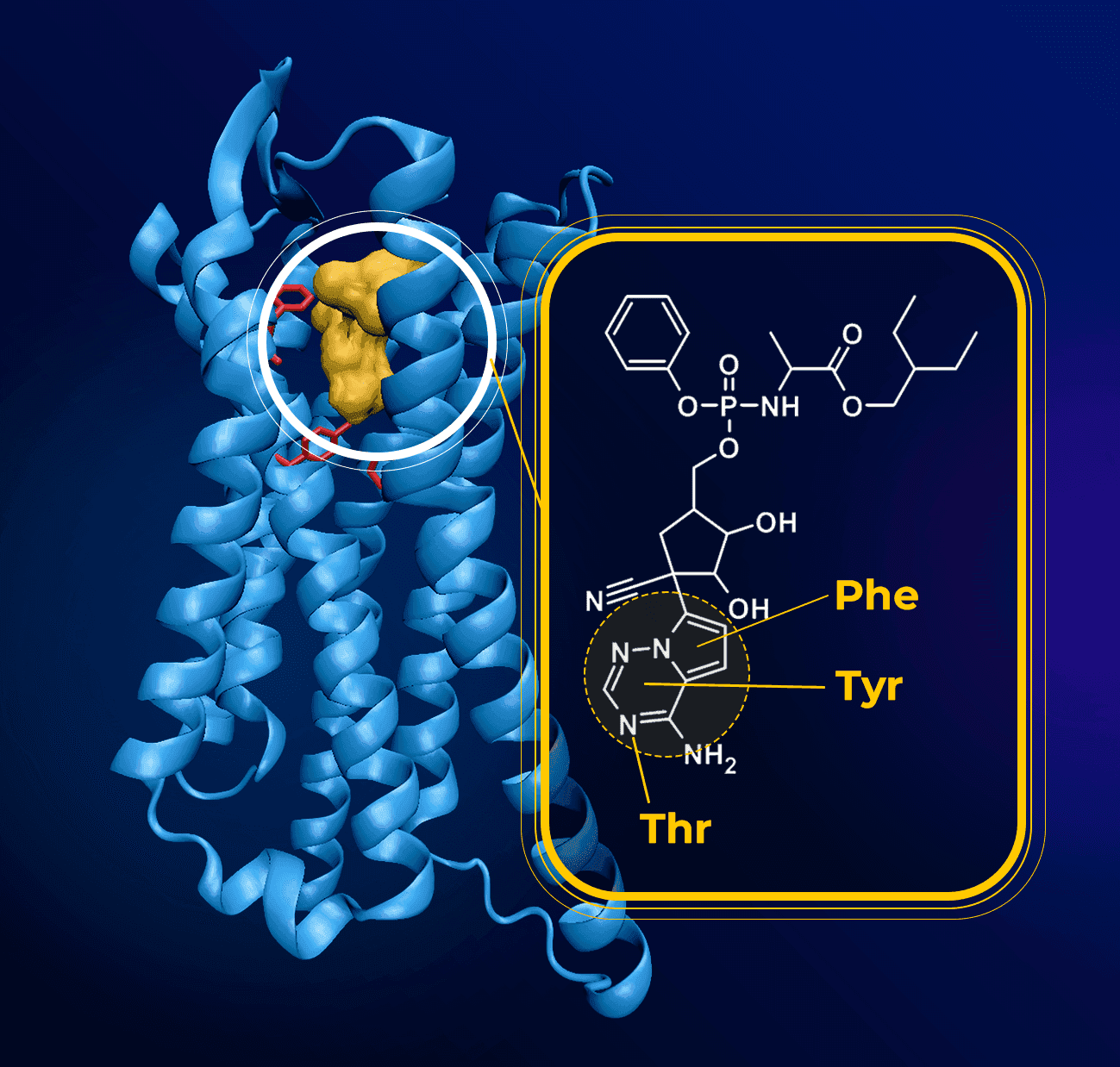
We identify anchor residues within Open-Close membrane protein pockets to stabilize the ligand scaffold and initiate virtual screening.
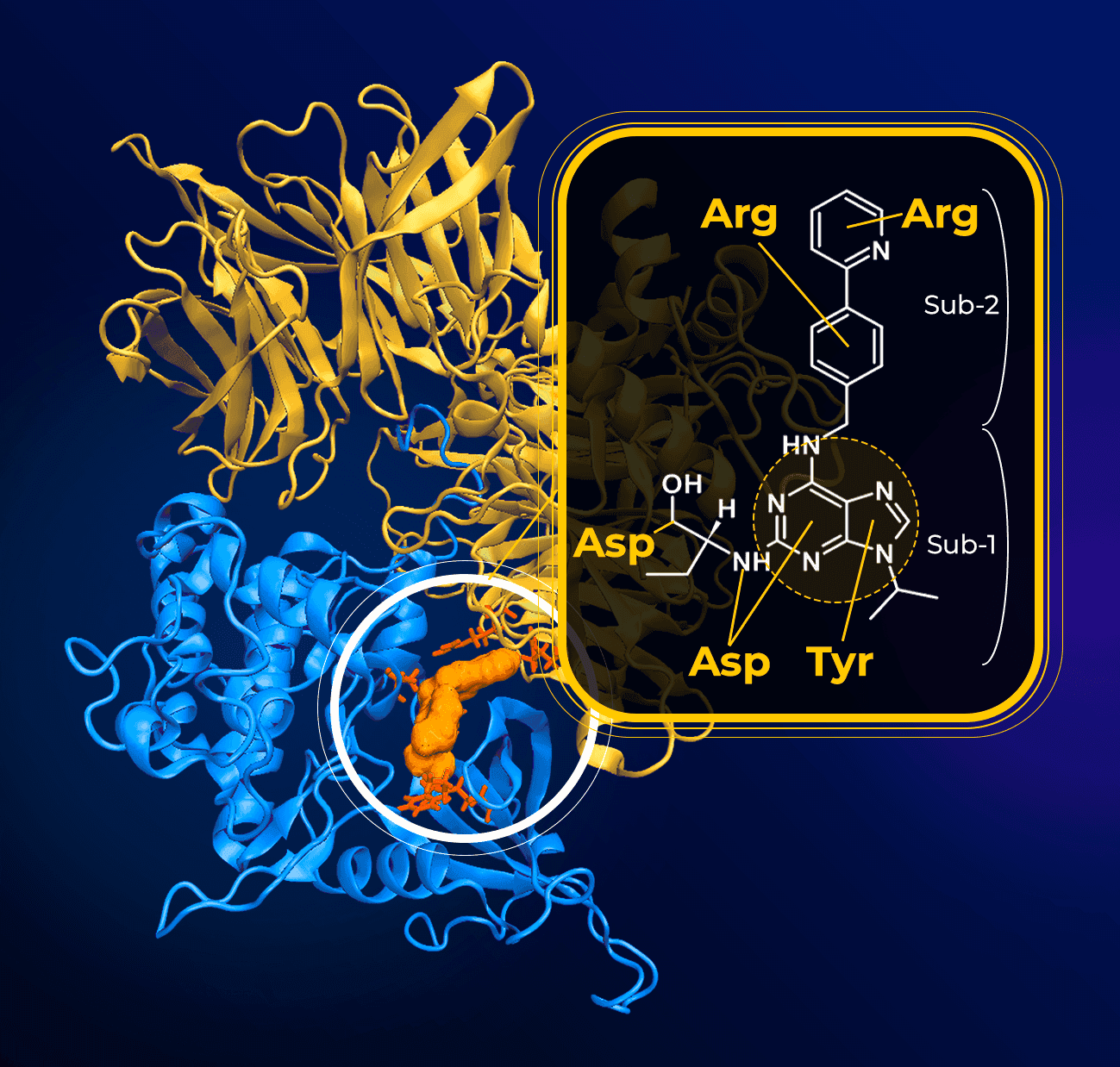
We search for a molecular glue that acts as an adhesive between two weakly interacting proteins, thereby strengthening their interaction.
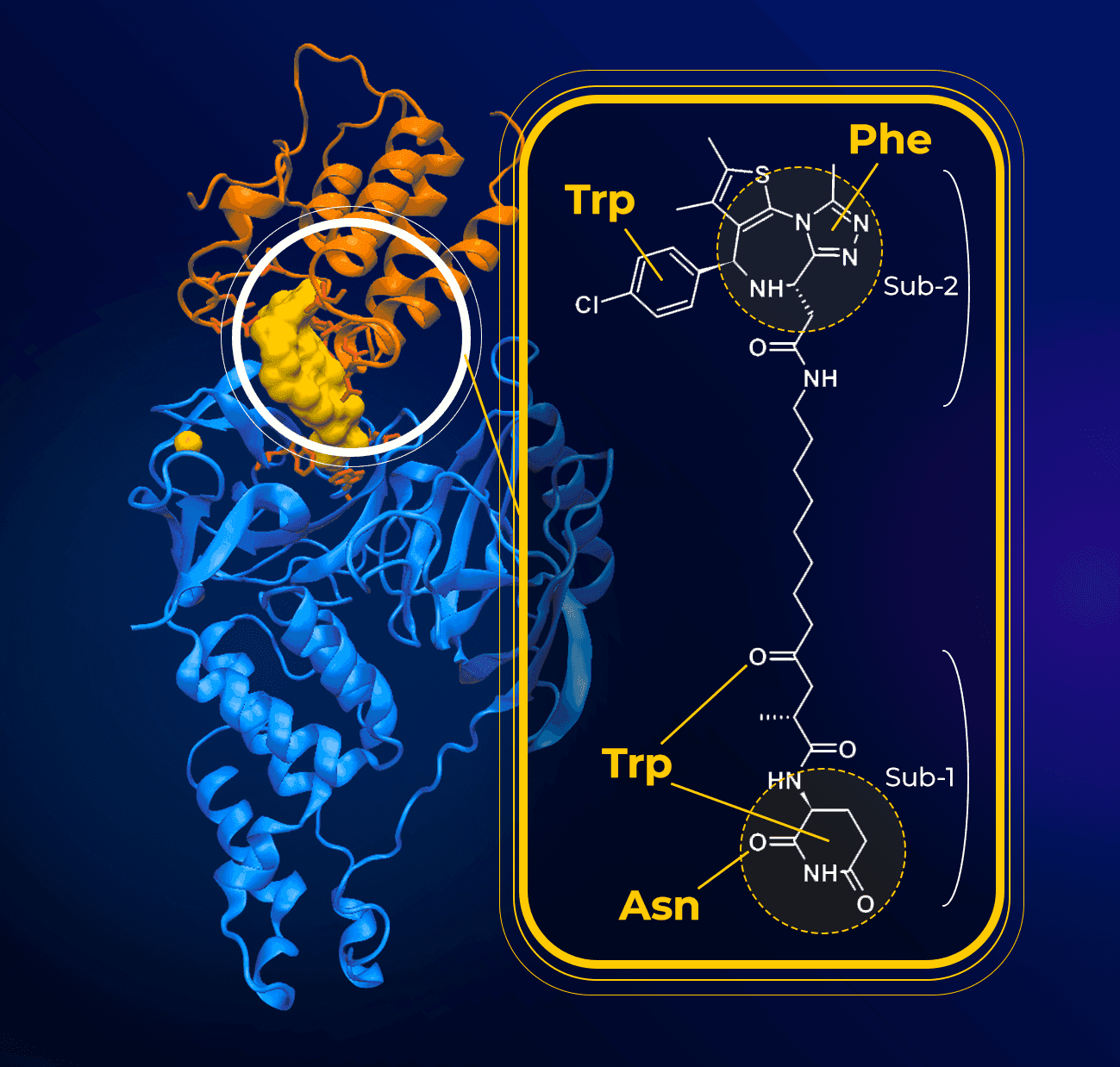
We identify the optimal compound that binds to the two pockets present in the degrader and the target, and then design a linker using the scaffolds of both compounds.
Workflow: Planning > IV > LM-VS™ > PAV
Among the MD snapshots from Molecular Dynamic simulation in 10 ns time scale, the purine ring showed the least movement and was therefore selected as the scaffold, which is highlighted in red in Figure 1.
R1 cluster indicates that the red-colored dot (Purine ring) interacts most frequently with the protein residue, Y683 in Figure 2.
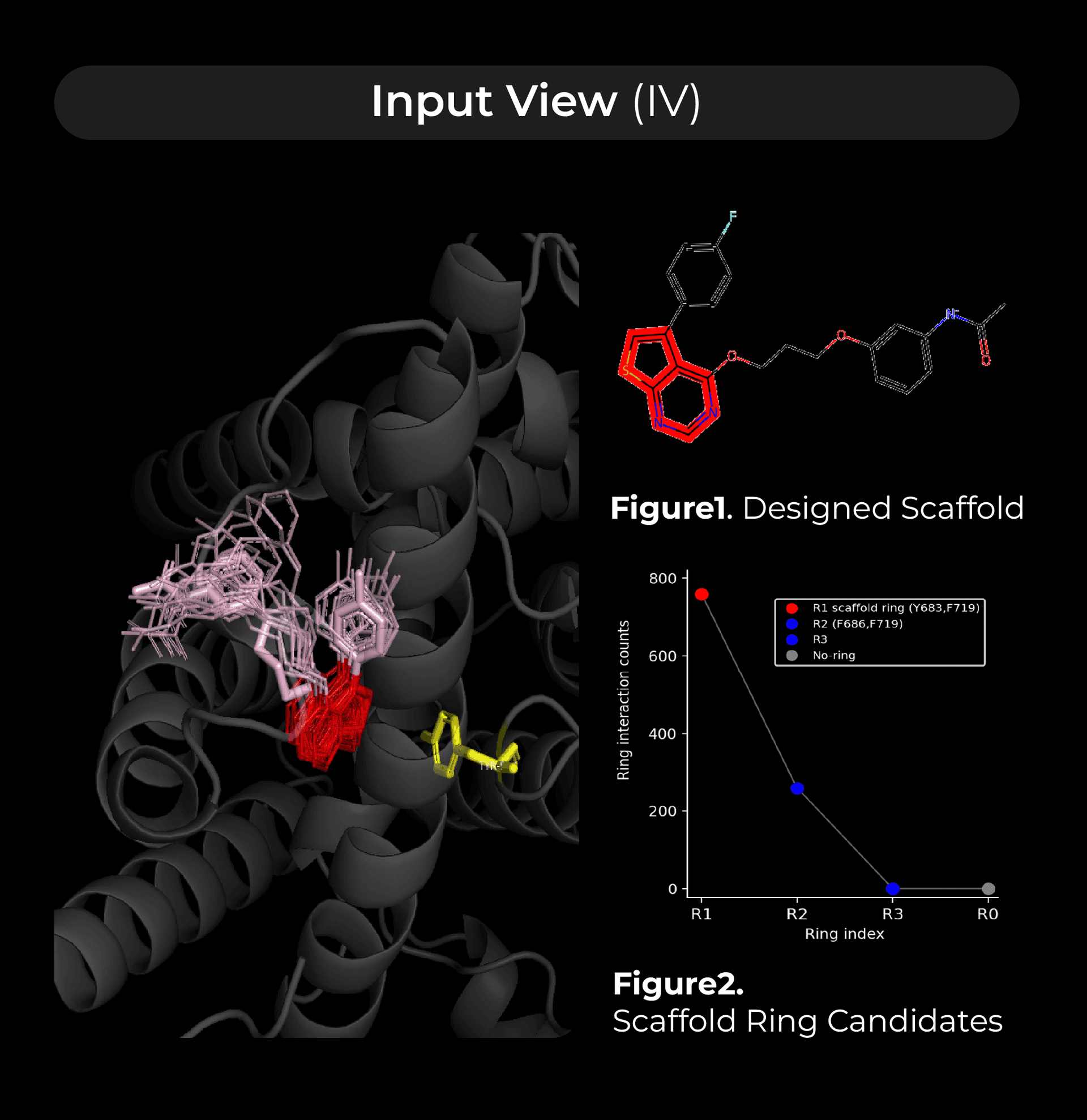
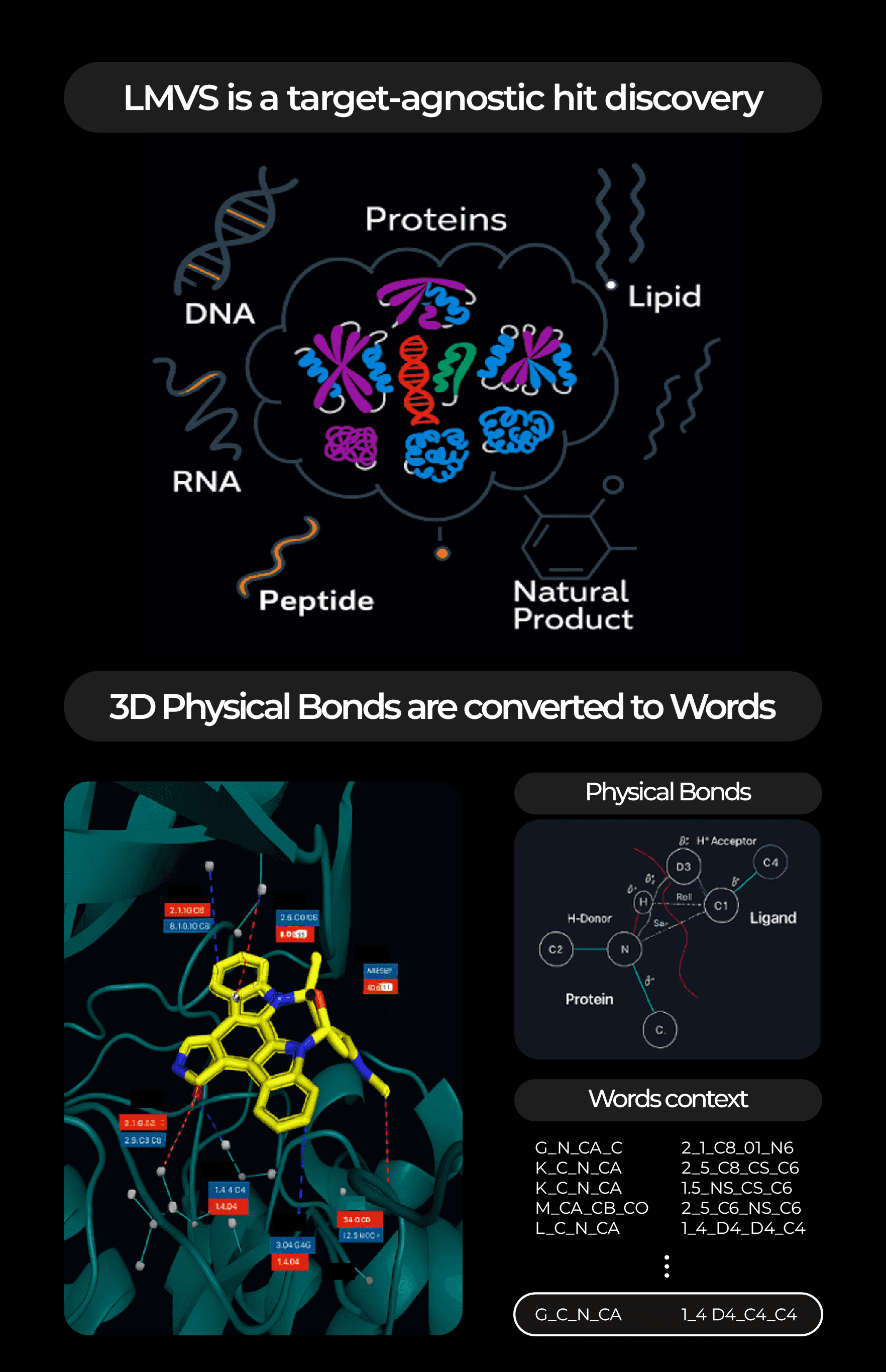
LM-VS™is a target-agnostic hit discovery platform because it is designed to perform screening even for the most challenging targets, GPCR, MG, TPD, as long as the target pocket contains residues that can serve as π-stacking anchors — such as TYR, PHE, TRP, ARG, or LYS.
By representing compound bonds within the pocket as 1D word strings and performing a Google-style inverted indexing search across a 10-billion-compound library, ultra-fast retrieval (as fast as 1/7,000 second) is possible.
Compounds selected based on 1D string similarity are then re-docked in 3D, and those filtered by binding energy and scaffold similarity are defined as hit candidates.
In each iteration, the top 200 candidates are used for subsequent searches, and by repeating this process for 50 to 100 cycles, it becomes possible to screen scaffold-derived analogs, derivatives that are synthetically accessible or commercially available.
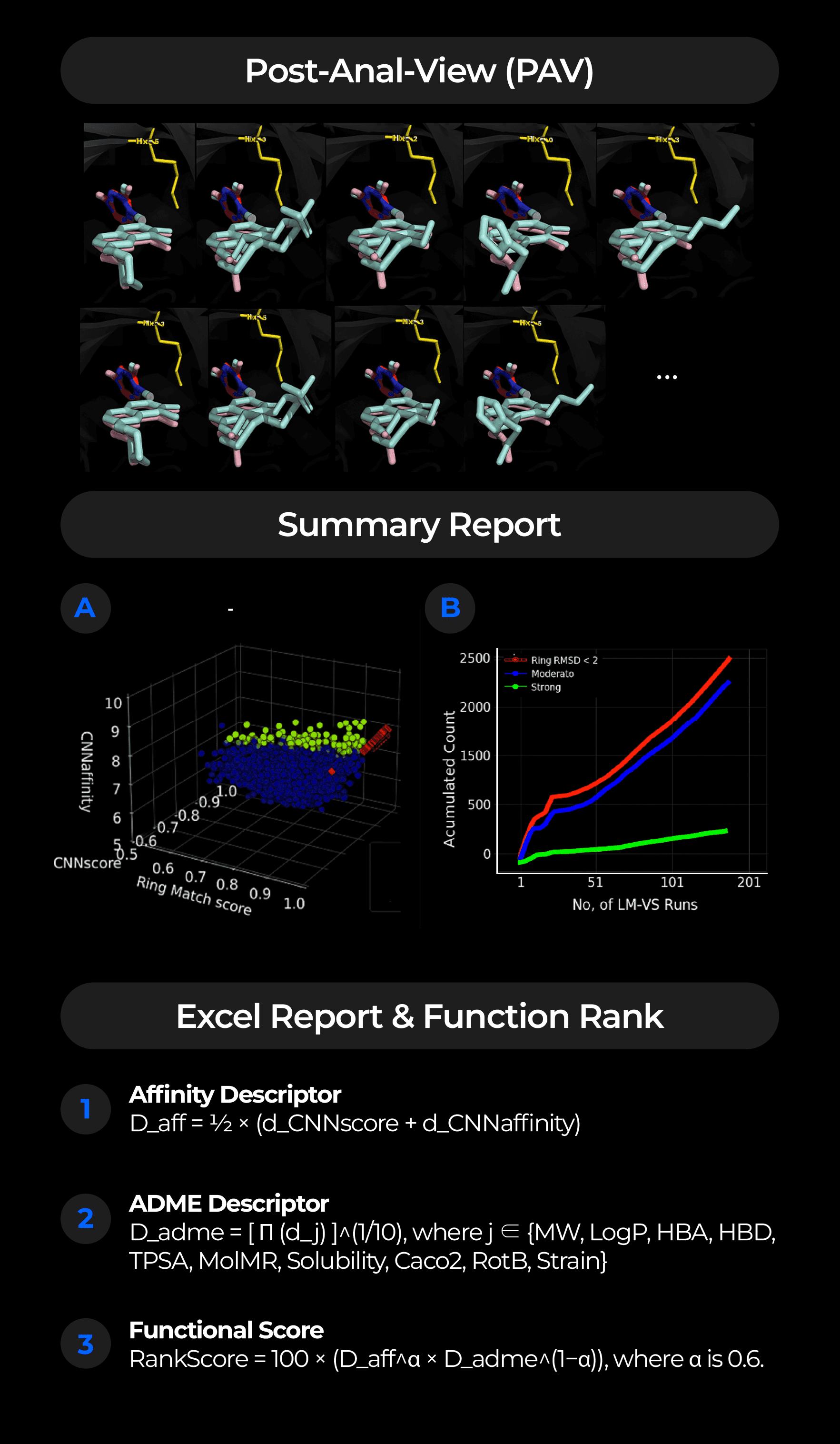
1. Post-Analysis-View
This result visualizes the docking within the protein pocket, where the anchor residues (in yellow) interacting with the compound scaffold are fixed in position.The remaining portions of the compound are displayed as the screened derivatives, as shown in the figure.
2. Summary Report
(A) Hit Candidates Distribution – A 3D scatter plot illustrates the distribution of hit candidates according to CNNaffinity, CNNscore, and Ring Match Score.
(B) Accumulation of Hit Counts per Run – The cumulative number of strong and moderate hits is shown as the runs progress.
3. Excel Report & Function Rank
This report includes vendor information for compound synthesis and provides a functional score calculated from affinity parameters (CNNscore, CNNaffinity) and ADME descriptors (MW, LogP, HBA, HBD, MolMR, Solubility, Caco2 permeability, Rotatable Bonds, Strain Energy) according to the following formula.
Watch how LM-VS™ transforms data into insight.
Start Interactive DemoStart Interactive DemoOur 15MW AI Bio Supercom Center runs 5,000+ GPUs in parallel, screening 10 billion compounds and generating results instantly.



LM-VS™ isn't about being cheaper — it's about being smarter.

AI virtually screens over 10 billion compounds, pinpointing the most promising candidates before any lab work begins. This dramatically reduces the time and resources required for early-stage discovery.